Cart 0


Introduction
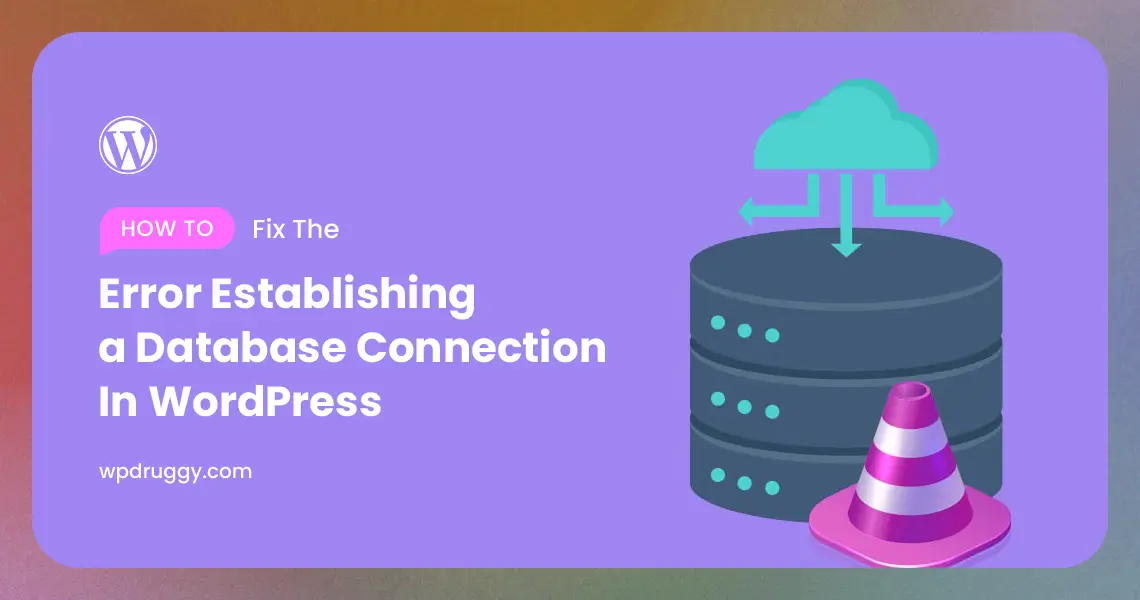
If you are a WordPress website owner or developer, you may have encountered the dreaded “Error Establishing a Database Connection” at some point. This error can be frustrating and worrisome, as it prevents your website from functioning correctly, and visitors are greeted with an unhelpful message. However, fear not, as this issue is quite common and can be resolved with a few straightforward steps. In this comprehensive guide, we will explore the root causes of the “Error Establishing a Database Connection” in WordPress and provide detailed solutions to help you get your website back up and running in no time.
Understanding the Error
Before we dive into the solutions, it’s essential to understand what the “Error Establishing a Database Connection” message means. In a nutshell, WordPress relies heavily on a database to store and retrieve all its content, including posts, pages, user data, and settings. When a user visits your WordPress site, the server needs to access the database to retrieve the necessary information to display the requested page.
The error occurs when WordPress is unable to connect to the database. There are various reasons why this might happen, ranging from simple misconfigurations to more severe issues with your hosting environment. Identifying the root cause is crucial to applying the appropriate solution.
Common Causes of the Error
Incorrect Database Credentials: One of the most common reasons for the error is incorrect database login credentials. When WordPress can’t authenticate the provided username or password, it fails to establish a connection to the database.
Corrupted Database: In some cases, the database itself may become corrupted due to various reasons such as server crashes, plugin conflicts, or other technical issues.
Database Server Unavailable: If the database server is down or experiencing heavy loads, it won’t be able to respond to WordPress’s connection requests.
Corrupted WordPress Files: Certain critical WordPress files may get corrupted, preventing the proper connection to the database.
Web Hosting Issues: Your web hosting provider may be experiencing problems or undergoing maintenance that affects database connections.
Step-by-Step Solutions
1. Check Database Credentials
The first and most straightforward step is to ensure that your WordPress database credentials are correct. To do this, follow these steps:
Step 1:
Access your WordPress site’s root directory via FTP or the file manager provided by your hosting control panel.
Step 2:
Locate the “wp-config.php” file, which contains the database connection information.
Step 3:
Open the “wp-config.php” file in a text editor and find the following lines:
php
define(‘DB_NAME’, ‘database_name’);
define(‘DB_USER’, ‘database_user’);
define(‘DB_PASSWORD’, ‘database_password’);
define(‘DB_HOST’, ‘localhost’);
Step 4:
Double-check the database name, username, password, and host to ensure they are accurate. If you are uncertain, you can usually find this information in your hosting account’s control panel or by contacting your hosting provider’s support.
Step 5:
Save the changes to the “wp-config.php” file and upload it back to your server, overwriting the existing file.
Step 6:
Visit your website to see if the error is resolved. If not, proceed to the next solution.
2. Test Database Connection
To further diagnose the issue, you can test the database connection directly from the “wp-config.php” file using the following steps:
Step 1:
Open the “wp-config.php” file again in a text editor.
Step 2:
Below the database credentials, add the following code:
php
$link = mysqli_connect(DB_HOST, DB_USER, DB_PASSWORD);
if (!$link) {
die(‘Error: Unable to connect to the database’);
}
echo ‘Success: Database connection established’;
mysqli_close($link);
Step 3:
Save the changes and upload the file back to your server.
Step 4:
Visit your WordPress site in a web browser. If the connection is successful, you will see the message “Success: Database connection established.”
Step 5:
If you see the success message, remove the code snippet you added to the “wp-config.php” file to avoid security risks.
Step 6:
If the test fails and displays an error message, it may indicate an issue with your MySQL server or hosting environment. In such cases, consider contacting your hosting provider for assistance.
3. Repair Corrupted Database Tables
If the tests confirm that your database is corrupted, you can attempt to repair it using the built-in repair feature in WordPress. Follow these steps to do so:
Step 1:
Access your WordPress site’s root directory via FTP or the file manager provided by your hosting control panel.
Step 2:
Locate the “wp-config.php” file, which contains the database connection information.
Step 3:
Before making any changes, it’s essential to create a backup of your database and files to avoid any potential data loss during the repair process.
Step 4:
Open the “wp-config.php” file in a text editor and add the following line just above the “/* That’s all, stop editing! Happy blogging. */” line:
php
define(‘WP_ALLOW_REPAIR’, true);
Step 5:
Save the changes and upload the file back to your server.
Step 6:
Now, access the WordPress database repair page by navigating to the following URL in your web browser:
arduino
http://yourdomain.com/wp-admin/maint/repair.php
Make sure to replace “yourdomain.com” with your actual domain name.
Step 7:
You will see two options on the repair page: “Repair Database” and “Repair and Optimize Database.” Choose the appropriate option and click the “Repair Database” button.
Step 8:
WordPress will now attempt to repair the corrupted tables. This process may take some time depending on the size of your database. Once it’s complete, you’ll see a success message.
Step 9:
Remove the line you added to the “wp-config.php” file in Step 4 to disable the repair feature. Leaving it enabled can pose a security risk to your website.
Step 10:
Visit your website to see if the error has been resolved. If it persists, move on to the next solution.
4. Check Web Hosting Server
The “Error Establishing a Database Connection” issue could be caused by problems with your web hosting server. Consider the following steps to check for server-related issues:
Step 1:
Contact your hosting provider’s support and inquire if there are any ongoing server issues or maintenance that could be affecting database connections.
Step 2:
Ask the hosting support team to verify if your MySQL server is running correctly and if there are any limitations or restrictions imposed on your database usage.
Step 3:
Inquire if the server’s resource allocation, such as CPU, memory, or disk space, is sufficient for your website’s needs. Inadequate resources can lead to database connection errors.
Step 4:
If your website experiences sudden traffic spikes, your hosting server might be overloaded. Consider upgrading your hosting plan to accommodate higher traffic.
5. Test with Another Database User
Sometimes, the database connection issue might be specific to a particular user account. You can create a new database user and test if that resolves the error:
Step 1:
Access your hosting account’s control panel and navigate to the database section.
Step 2:
Create a new user with appropriate privileges and assign it to the database used by your WordPress site.
Step 3:
Update the database credentials in the “wp-config.php” file to reflect the new user details.
Step 4:
Save the changes and upload the file back to your server.
Step 5:
Visit your website to check if the error persists. If the new user account works, it indicates an issue with the previous user’s credentials.
Read this: How to Make a WordPress Site Multilingual
Conclusion
Experiencing the “Error Establishing a Database Connection” in WordPress can be frustrating, but it’s a common issue that can be resolved with the right approach. By following the step-by-step solutions provided in this guide, you can effectively diagnose the problem and implement the necessary fixes. Remember always to back up your website before making any significant changes to ensure the safety of your data.
If you find that the error persists even after trying all the solutions in this guide, don’t hesitate to seek assistance from your hosting provider or consult with experienced WordPress developers. They can help you with more advanced troubleshooting and ensure your website is running smoothly once again.
In summary, stay calm, be patient, and systematically troubleshoot the problem. With persistence and the appropriate solutions, you can overcome the “Error Establishing a Database Connection” and continue delighting your website visitors with your valuable content and services. Happy WordPress-ing!